
Whirlpool Washer Troubleshooting Guide 2026
Owning a reliable appliance is essential for any modern household, and Whirlpool has long been a trusted name in laundry care. However, even the most durable machines can face technical difficulties over time. As we navigate through 2026, understanding how to maintain and troubleshoot your home appliances is more important than ever. Whether your machine is making strange noises, failing to complete a cycle, or simply refusing to start, this blog is designed to help you diagnose and resolve the most frequent problems. By identifying the root cause of these issues early, you can save time, money, and extend the lifespan of your appliance significantly. Let’s dive into the essential troubleshooting steps every Whirlpool owner should know.
Common Issues and Initial Diagnostic Steps
When your laundry day comes to a sudden halt, it is easy to feel frustrated. Before jumping to conclusions or assuming the machine is broken beyond repair, you should perform a basic inspection. Many common problems, such as a whirlpool washer not draining or a machine failing to agitate, are often caused by simple obstructions or minor electrical glitches that can be cleared by the homeowner. First, always ensure the machine is properly leveled, as an unlevel washer can trigger safety sensors that prevent certain cycles from initiating. Checking your water inlet hoses for kinks and ensuring the drain hose is not clogged are the two most common "quick fixes" for performance issues.
Furthermore, consider the digital interface of your machine. In many modern models, error codes will appear on the control panel to guide your troubleshooting efforts. If you see a flashing light or a code, refer to your specific owner’s manual. If you have exhausted these basic steps and the machine is still failing to function correctly, it might be time to investigate mechanical or electrical components. While some repairs are straightforward, others require technical expertise. In such cases, contacting a professional service provider like Appro Appliance Service can ensure that your machine is handled by someone with the correct tools and knowledge to safely resolve the issue without causing further damage.
Advanced Troubleshooting and Repair Strategies
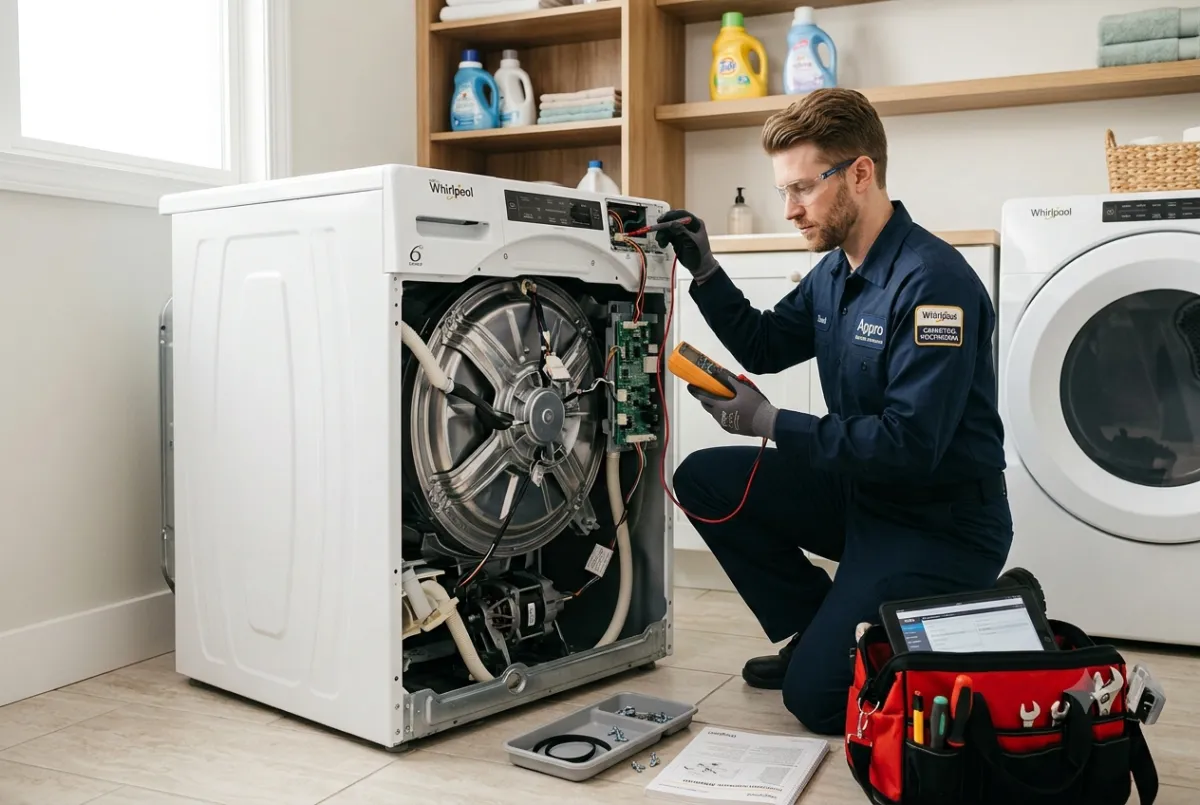
When basic maintenance no longer solves the issue, it is time to investigate the washer’s internal components more carefully. Understanding how each part works can help you identify the source of the malfunction more accurately. A systematic approach reduces repair costs and prevents unnecessary part replacements.
The following are included:
Inspect the drive system for damaged or worn mechanical components.
Check whether the door latch assembly is securely locking before the spin cycle begins.
If the drum does not rotate, consider a whirlpool washer belt replacement.
Examine the motor for unusual noises or overheating.
If the control panel behaves unpredictably, a whirlpool washer board replacement may be necessary.
Disconnect the appliance from the power source before inspecting electrical components.
Contact a qualified technician if advanced electrical repairs are required.
Dealing with a Whirlpool Washer not Draining
When you are dealing with a whirlpool washer not draining, the problem is frequently located in the drain pump or the filter. Many Whirlpool models include a clean-out trap designed to catch debris like coins, hairpins, or buttons. If this trap is clogged, the water simply has nowhere to go. Regularly cleaning this filter can prevent many drainage issues. Furthermore, if the drain pump itself has failed, it will produce a distinct humming sound but will not move water. Replacing a pump requires accessing the underside or front panel of the unit, a task that requires caution and the correct replacement parts. The key to fixing this issue is careful inspection of the path between the drum and the external house plumbing, ensuring no debris blocks the flow of water.
Fixing a Whirlpool Washer not Spinning
A washer that refuses to spin can interrupt your entire laundry routine and leave clothes soaking wet. Fortunately, many spinning issues are caused by components that can be inspected without replacing the entire appliance. Performing regular inspections helps prevent major mechanical failures.
To resolve this issue, consider the following:
Inspect the drive pulley for wear, cracks, or misalignment.
Check the motor coupling for signs of damage.
Make sure the laundry load is evenly balanced.
Remove debris that may interfere with pulley movement.
Verify that the suspension system is functioning correctly.
Test whether the motor engages during the spin cycle.
Address whirlpool washer not spinning issues before they cause additional damage.
Performing a Whirlpool Washer Belt Replacement
Executing a whirlpool washer belt replacement is a task that many handy homeowners can perform with the right guidance. The belt acts as the essential bridge between the motor and the drum. Over years of use, especially in the 2026 household environment, these rubber components can become brittle, crack, or lose their tension entirely. Before purchasing a new belt, verify the model number of your machine to ensure a perfect fit. Once the belt is replaced, the transition of energy from the motor will once again be smooth, allowing for consistent wash cycles. It is recommended to keep the area around the belt clean of any lint or debris to ensure longevity of the new component.
Executing a Whirlpool Washer Board Replacement
The control board manages nearly every function of a modern washing machine. Replacing it requires careful handling because electronic components are highly sensitive. Confirming the exact part number before installation helps prevent compatibility issues.
Before replacing the control board, keep these points in mind:
Perform a hard reset before replacing the control board.
Inspect the board for burn marks or damaged circuits.
Purchase the correct replacement based on the washer model number.
Secure every electrical connector firmly during installation.
Verify that the control panel is properly aligned after installation.
Test all wash cycles after completing the whirlpool washer board replacement.
Seek professional assistance if programming or calibration is required.
Routine Maintenance for Longevity
To avoid frequent repairs, make monthly maintenance part of your routine. Wipe the door seals regularly to help prevent mold buildup, run a cleaning cycle with washer cleaning tablets, and inspect the hoses for any signs of wear or damage. These simple habits can help keep your washer running efficiently for years. It's also a good idea to check for small leaks around the base of the machine, as catching them early can help prevent costly water damage to your floors.
Conclusion
Troubleshooting your Whirlpool washer doesn't have to be overwhelming. Once you understand the common signs of problems-like drainage issues or a washer that won't spin-you can often identify the cause and decide whether a simple fix, such as a whirlpool washer belt replacement, is needed. Keeping up with regular maintenance and taking care of small issues early can help extend the life of your appliance and reduce the chances of expensive repairs. If the problem is more complex or requires professional tools and expertise, don't hesitate to contact our team. We're here to help get your Whirlpool washer back to working like it should.


