
Resetting Your Whirlpool Appliances: According to 2026 Updated Information
Whirlpool appliances are renowned for their durability and modern digital features. However, even high-end refrigerators, washers, dryers, and dishwashers occasionally experience power surges, frozen touchscreens, or false error codes. Knowing how to perform a proper system reboot can save you time, stress, and unneeded stress. According to 2026 updated information from modern repair technicians, understanding when a simple reboot works—and when a deeper issue is present—is essential for extending your unit's lifespan.
Step-by-Step Guide to Resetting Common Whirlpool Units
Modern home units utilize sensitive microprocessors that occasionally glitch due to momentary voltage drops, door sensor interruptions, or interrupted cycles. Fortunately, most models respond well to a standardized reboot procedure.
Performing a Hard Power Cycle on Smart Controls
For modern front-load washers, top-load units, smart refrigerators, and ranges, the universal standard reset involves a hard power cycle:
Disconnect the Power: Unplug your appliance directly from the wall outlet. If the plug is hard to reach or hard-wired, shut off the dedicated circuit breaker in your electrical panel.
Wait 60 to 120 Seconds: Allow at least one to two full minutes for the internal capacitors on the control board to drain completely.
Restore Power and Test: Plug the unit back in or switch the circuit breaker back on. Wait 30 seconds for the system to boot up, then run a short test cycle.
For washing machines or dryers stuck mid-cycle, holding the Start/Pause or Power/Cancel button for 3 to 5 seconds often cancels active routines before you initiate the power cut. On newer digital touchscreen models, navigating to settings to clear active alerts or selecting "Restore Factory Defaults" resolves minor software freezes according to 2026 updated information from manufacturer service guidelines.
When a Reset Isn't Enough: Signs You Need Professional Repairs
While a quick power cycle clears temporary electronic hiccups, a reset cannot fix mechanical wear or physical component failures. If you clear a fault code (such as F1E1, F8E1, or LOC) and it immediately returns when you restart the cycle, your machine is signaling an active hardware problem rather than a transient glitch.
Repeatedly force-resetting an appliance with underlying issues—such as a burnt-out heating element, clogged drain pump, or failing thermistor—can strain the main control board, turning a minor repair into an expensive replacement. Based on 2026 updated information on home appliance safety, running equipment with active internal faults increases energy consumption and risks secondary component damage.
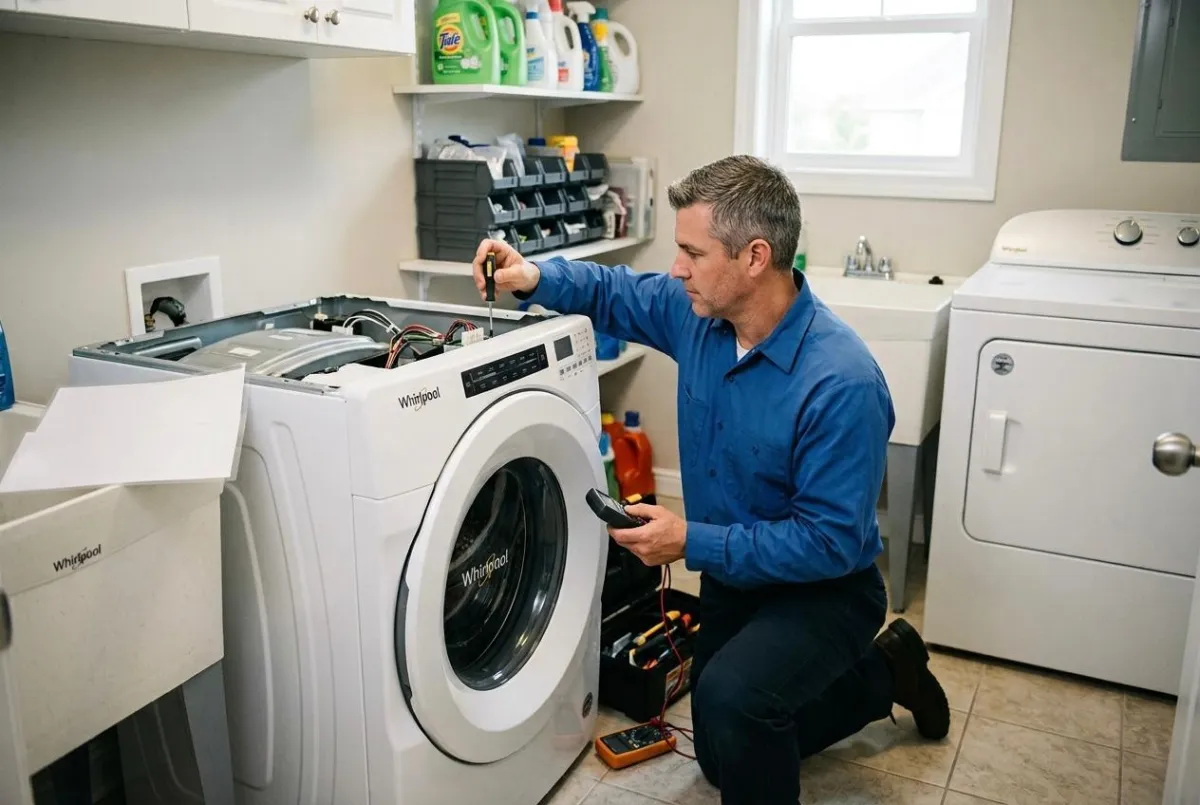
When control panels remain frozen or error codes persist after a power reset, turning to experienced specialists ensures proper diagnostic testing and component replacement.
Need Fast, Professional Appliance Help?
If resetting your Whirlpool appliance didn't resolve the glitch, don't let broken kitchen or laundry units disrupt your routine. The expert technicians at Appro Appliance Services are ready to help. From advanced digital diagnostics to precision component repairs, we ensure your home runs smoothly and safely. Contact Appro Appliance Services today to schedule your service appointment!


