A refrigerator ice maker is a convenient feature that many households rely on every day. When it suddenly stops making ice, produces small cubes, leaks water, or gets stuck during a cycle, finding the cause quickly can prevent further problems. According to 2026 updated information, common ice maker issues are often connected to water flow, freezer temperature, filters, frozen fill tubes, or defective components.
Whether you need ice maker repair or want to understand why your refrigerator is not producing enough ice, knowing the most common causes can help you decide when professional service is necessary.
Common Reasons an Ice Maker Stops Working
Several problems can affect ice production. Before arranging repair ice maker service, check whether the ice maker is switched on and whether its shutoff arm or sensor can move freely. A blocked arm can signal the unit to stop making ice.
A clogged or improperly installed water filter can also restrict water flow. Manufacturers commonly recommend replacing refrigerator water filters around every six months, although the exact schedule depends on the model and water conditions.
Another frequent issue is a frozen fill tube. If water cannot reach the ice mold, the appliance may stop producing ice completely. Water supply lines can also become kinked or restricted behind the refrigerator.
Freezer temperature matters as well. Many manufacturers recommend keeping the freezer around 0°F (-18°C), while temperatures that are too warm can interfere with normal ice production.
When Professional Ice Maker Service Is Needed
Some problems require more than a basic adjustment. If the water inlet valve is defective, the ice maker motor or thermostat has failed, or the internal assembly cannot complete its cycle, professional diagnosis may be the safest solution.
According to 2026 updated information, testing individual components before replacing parts can help identify the actual source of the failure and prevent unnecessary repairs.
What to Expect From Ice Maker Repairs
Professional ice maker repairs should begin with a complete inspection of the ice maker, water supply, filter, fill tube, temperature settings, and related electrical components. This approach helps determine whether the problem is caused by water flow, a mechanical failure, or an internal refrigerator issue.
For homeowners searching for ice maker refrigerator repair, timely service can restore normal ice production and help prevent recurring problems. If an ice maker repeatedly freezes, leaks, makes unusual sounds, or stops cycling, simply resetting it may not solve the underlying issue.
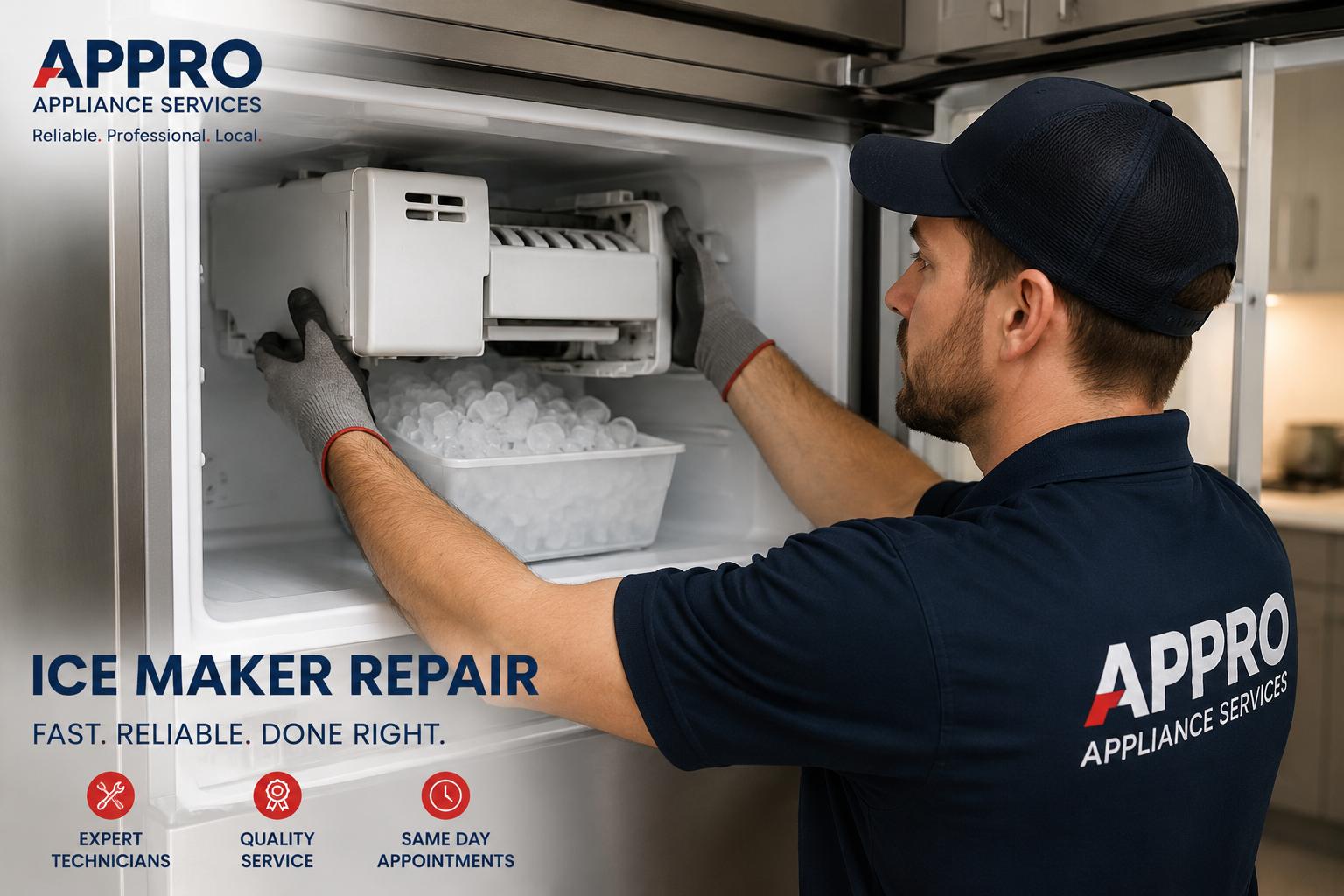
When repairing an ice maker, technicians may need to inspect or replace components such as the water inlet valve, ice maker module, fill tube, sensor, or other model-specific parts. The correct repair depends on the refrigerator’s brand, model, symptoms, and component condition.
According to 2026 updated information, proper diagnosis remains an important part of appliance service because similar symptoms can have different causes. Instead of replacing parts at random, a professional inspection can identify the component actually responsible for the failure.
If your refrigerator is no longer making ice or the ice maker is producing inconsistent results, contact APPRO Appliance for professional appliance service and dependable solutions for your refrigerator ice maker.
Protect Your Home’s Exterior from Paint Blistering
Preventing paint blistering starts with proper surface preparation, the right painting conditions, and quality exterior paint. Moisture, heat, and poor adhesion can cause bubbles and peeling that affect both your home’s appearance and the durability of its finish. With professional exterior home painting, El Royale Painting can help protect your home’s exterior while giving it a clean, long-lasting look