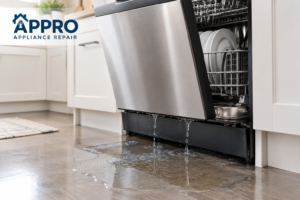

You open the door expecting sparkling, dry plates and find a pool of water on every cup. A dishwasher that leaves dishes wet is one of the most common household complaints, and it is usually fixable. Before you assume you need a new machine, it helps to know what is going wrong. Many problems can be solved in minutes, and the rest call for professional dishwasher repair.
Based on 2026 guidance from major manufacturers, most modern dishwashers dry with a mix of residual heat, rinse aid, and venting. Newer energy-efficient models use less heat than older ones. That makes small issues, such as an empty rinse aid dispenser, more noticeable than they used to be.
Why Is Your Dishwasher Not Drying Dishes?
Several causes sit behind wet dishes, and they range from simple to serious.
Empty rinse aid dispenser. Rinse aid makes water sheet off dishes instead of beading up. If the dispenser is empty, drying performance drops sharply.
Wrong cycle or skipped heated dry. Eco and quick cycles often turn off heated drying to save energy. Check that you have selected a cycle with a dry option.
Failed heating element. The heating element raises the temperature inside the tub during the final stage. If it burns out, the water never gets hot enough to evaporate, and the dishes come out damp. This is one of the most frequent reasons people call for appliance repair.
Faulty vent or fan. Some models use a vent or fan to move moist air out. A stuck vent traps humidity inside the dishwasher.
Overloaded racks or poor loading. Nested bowls and blocked spray arms leave water trapped on surfaces.
Defective thermostat or control board. These parts regulate the drying cycle. When they fail, the cycle may end early or never reach the right temperature.
Fixing a Dishwasher Not Drying Dishes at Home
Try these checks before you call anyone:
Refill the rinse aid. Set the dial to a medium or higher level if drying is poor.
Select a heated dry or sanitize cycle. Avoid eco-only settings for heavy loads.
Reload the racks. Face dishes toward the spray arms, tilt cups so water runs off, and leave space between items.
Run hot water at the sink first. Starting the cycle with hot water gives the heating stage a head start.
Crack the door after the cycle. Letting steam escape helps dishes finish drying.
Inspect the heating element. If it looks blistered, cracked, or discolored, it likely needs replacement. Always disconnect power before inspecting anything inside the tub.
Plastic items are a special case. Plastic holds less heat than glass or ceramic, so it stays wet longer. This is normal and not a sign of a broken machine. Placing plastics on the top rack keeps them away from pooled water.
According to updated 2026 recommendations from appliance safety groups, you should never bypass or tamper with heating components or wiring yourself. If a test points to an electrical part, stop and bring in a qualified technician.
When Dishwasher Repair Service Makes Sense
If you have tried the simple fixes and your dishes are still wet, it is time to consider a professional dishwasher repair service. Warning signs include a burning smell, cycles that end early, standing water, error codes, or a tub that never feels warm. Delaying repair can lead to more wear on the pump, control board, and seals, and that turns a small fix into a costly one.
A trained technician can test the heating element, thermostat, vent, and control board with the right meters and tools. That usually costs less than guessing at parts or replacing the whole unit. Repairing a dishwasher also keeps a working machine out of the landfill, which many homeowners prefer.
What to Expect From a Dishwasher Repair Company
A reputable dishwasher repair company should arrive on time, explain the problem in plain language, and give you a clear price before starting work. Look for licensed and insured technicians, upfront estimates, and warranties on parts and labor. Ask whether they service your brand and whether they carry common parts on the truck, since that often means same-day completion.
Our technicians handle drying problems every week. They find the root cause rather than treating symptoms, so your dishwasher stays reliable long after the visit.
Book Home Appliance Repair With APPRO Appliance
Whether your dishwasher is leaving dishes wet, leaking, or refusing to drain, our team is ready to help. We offer fast scheduling, honest pricing, and skilled home appliance repair for the machines your household depends on. Contact us today to schedule your visit and get your kitchen running smoothly again.
Keep Your Dishwasher Drying Well
A few habits will prevent most drying problems:
Keep rinse aid topped up.
Clean the filter monthly to avoid clogs.
Run a dishwasher cleaner every one to two months to remove buildup.
Scrape large food particles off dishes before loading.
Check spray arms for blocked holes.
Schedule a yearly inspection if your dishwasher gets heavy use.
A dishwasher that is not drying dishes is frustrating, but it rarely means the end of the machine. Start with rinse aid, cycle settings, and loading habits. If wet dishes persist, a qualified technician can find the cause quickly and restore performance.
Protect Your House Inside and Out
A well-maintained kitchen is only part of a healthy home. Fresh, durable paint protects your walls, siding, and trim from moisture and wear, just as proper appliance care protects your kitchen. For professional painting that keeps your property looking its best, visit El Royale Painting and see how their team can refresh your home.